
comsol multiphysics price is not one universal commercial number. In 2026, your cost depends on license type, required modules, term or perpetual purchase, support renewal, and concurrent evaluations. A named-user license may suit one engineer, but distributed cluster optimization can require an FNL instead.
The practical buying question is not only “What does COMSOL cost?” It is “What license, modules, and access model complete one design at an acceptable cost?” This guide converts COMSOL’s access rules and Purdue’s institutional reference figures into a worksheet for parallel optimization.
What is COMSOL Multiphysics price in 2026?
COMSOL Multiphysics price must be requested for your configuration because COMSOL does not publish one universal commercial price. The quote changes with CPU, NSL, or FNL access, physics modules, term or perpetual status, and support requirements.
COMSOL’s License Options page says perpetual licenses include updates and support for the first 12 months. Renewal is 20% of the then-current price. Term licenses have a 12-month minimum and include updates and support during the term.
That difference affects your budget horizon. A perpetual quote may look larger at purchase, while a term quote makes annual planning easier. Neither figure should be treated as an official price until COMSOL quotes your modules and deployment.
Which COMSOL license fits parallel optimization?
For parallel optimization, FNL is the license type to investigate first when evaluations run across remote machines, clusters, or cloud resources. CPU and NSL can fit local work, but their access limits can conflict with distributed execution.
| License | Access limit | Parallel optimization fit | Use when |
|---|---|---|---|
| CPU | One designated computer; users take turns; no network or remote access | Local serial studies only | A single workstation runs the model |
| NSL | One named user; up to four computers; up to two computers at once | Useful for one engineer with limited local parallel work | One named engineer runs local or approved encrypted remote sessions |
| FNL | Concurrent users; network machines; remote computing; cluster and cloud support | Best fit for distributed evaluations and cluster sweeps | Your optimizer needs shared access, remote compute, or multiple nodes |
The NSL limit is specific: one named user can install COMSOL on up to four computers and run it on up to two computers simultaneously. An FNL supports concurrent users, remote computing, and cluster or cloud computing on Windows and Linux. COMSOL’s page states that cluster sweeps can use a single model across multiple compute nodes without a stated node limit.
The common failure mode is budgeting for one NSL because one engineer owns the study, then discovering that FNL access is required for distributed cluster execution. Count compute access separately from human ownership before you request a quote.
How do you build a COMSOL license cost model?
A useful COMSOL license cost model starts with completed designs, not only license seats. Add the license, modules, support or renewal, and infrastructure costs, then divide by the number of completed designs your optimization campaign must deliver.
Use this quote worksheet
- Record the maximum concurrent evaluations. For example, an NSGA-II campaign with a population of 5 may still need more than 5 solver sessions if studies overlap or multiple scenarios run together.
- List every required module for every study. A transient evaporative-cooling model may use different physics than a structural or CFD study, so do not quote the base product alone.
- Specify remote, cluster, and cloud access. Include the number of nodes, operating systems, queue method, and whether several users need access at once.
- Choose a term or perpetual budget horizon. Include the first 12 months of updates and support for a perpetual license, then model the 20% renewal rule using the then-current price.
- Calculate cost per completed design: (license allocation + module allocation + support or renewal + infrastructure) divided by completed feasible designs.
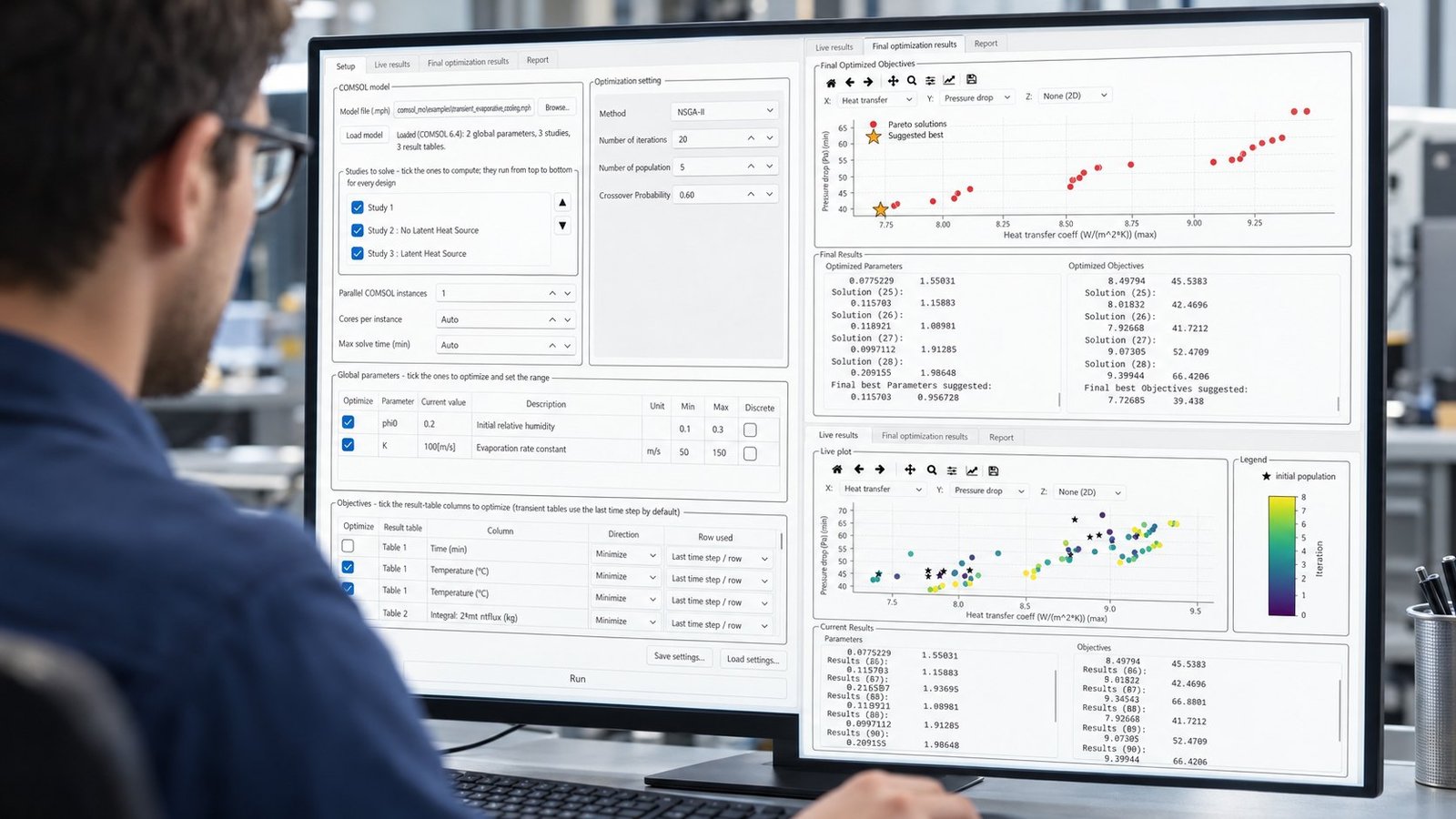
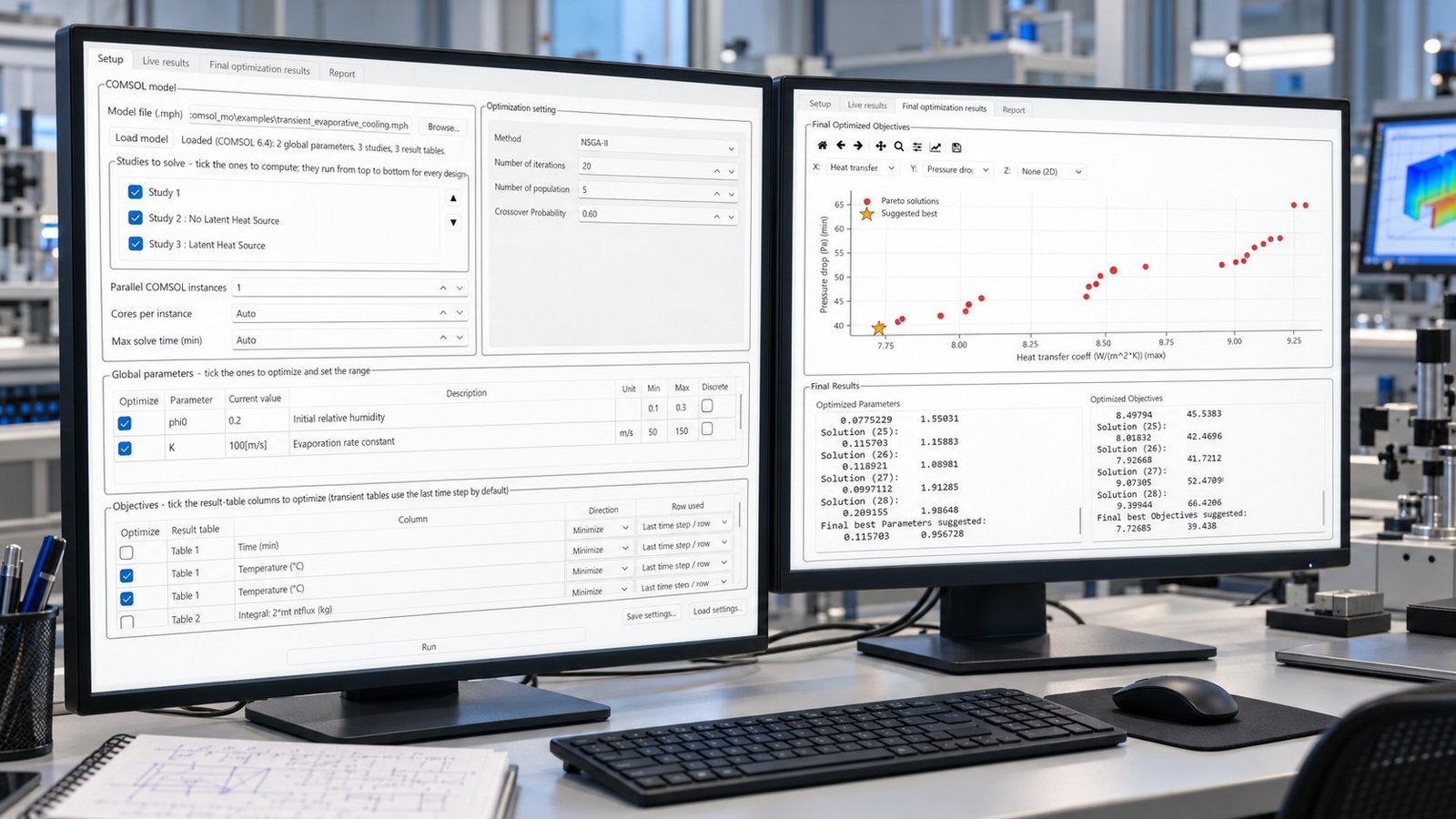
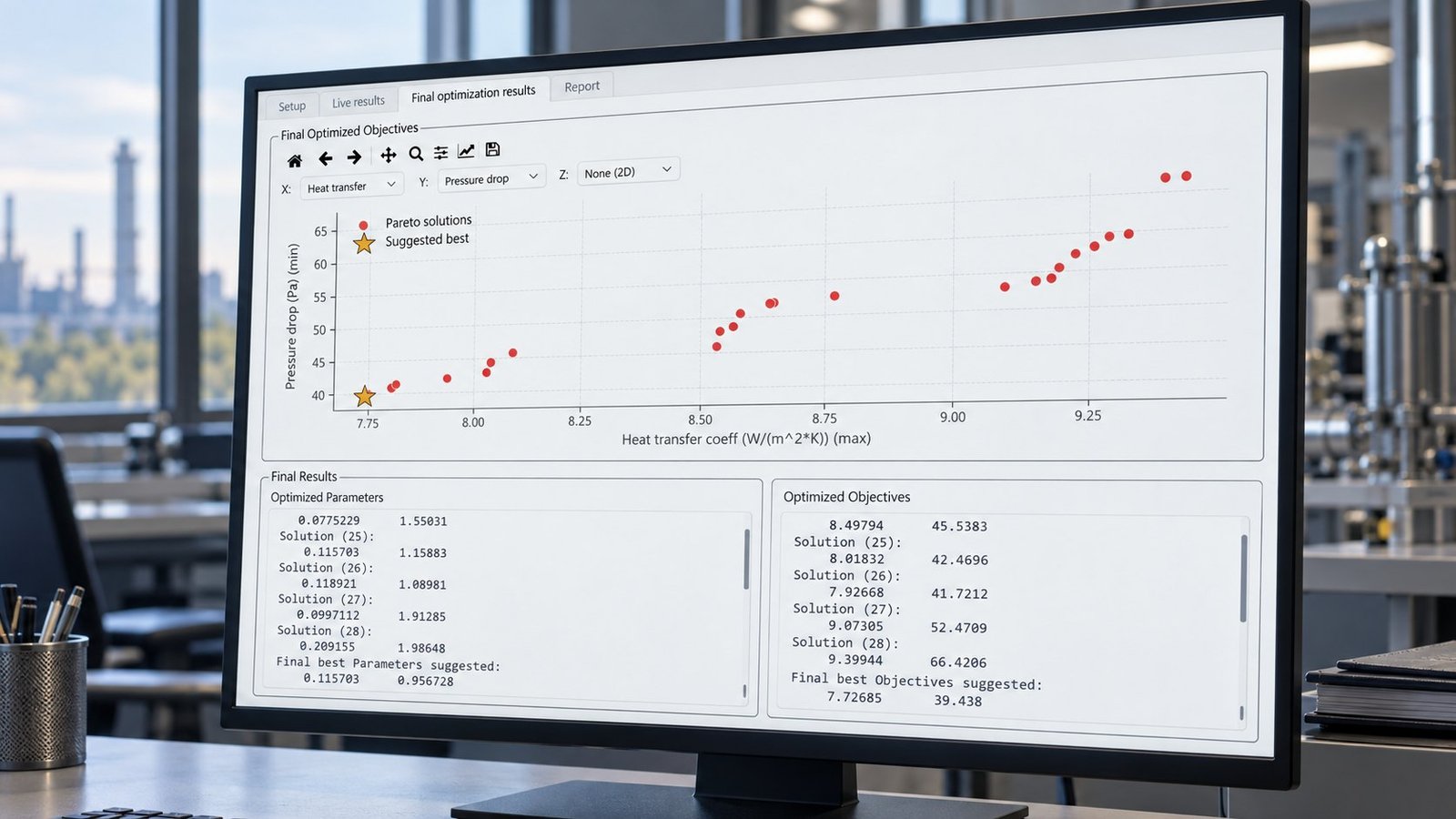
Multi Optimization exposes the workload variables that matter. Its COMSOL setup can define three studies, optimize parameters such as relative humidity and evaporation rate, and run multiple objectives. A displayed NSGA-II example uses 20 iterations and a population of 5, while the report shows 28 solutions. Those settings help you describe the campaign, but they do not replace a license quote.
How do modules and renewal change COMSOL license cost?
COMSOL add-on pricing can materially change the quote because each required physics or application module adds scope beyond the base license. Purdue’s Article – Comsol Licensing lists institutional reference figures of about $4,500 for a base research license and roughly $600 to $4,500 for modules.
Purdue also reports yearly licenses at approximately 50% of perpetual cost and a class license at approximately $6,000 per year. Treat these as institutional reference prices, not current commercial quotes. They are useful for order-of-magnitude planning, not procurement approval.
For a commercial optimization workload, ask the vendor to itemize the base license, each module, license concurrency, cluster capability, support renewal, and any required deployment services. Keep the module list tied to actual studies so unused capabilities do not inflate the estimate.
If your next decision is model workflow rather than procurement, the topology optimization comsol benchmark provides a useful adjacent reference. If you plan to reduce repeated CFD solves with a surrogate, the cfd ai guide covers that modeling path.
COMSOL Multiphysics price FAQ
Does COMSOL publish one commercial price?
No. COMSOL provides license options and access rules, but your commercial price depends on the selected license, modules, term, and deployment.
Is an NSL enough for cluster optimization?
Not necessarily. NSL supports one named user on up to four computers and two computers at once. Distributed cluster execution should be quoted against FNL requirements.
What is the difference between perpetual and term licensing?
A perpetual license includes updates and support for the first 12 months, with renewal at 20% of the then-current price. A term license runs for at least 12 months and includes updates and support during the term.
How should you compare two quotes?
Compare total cost per completed feasible design. Normalize the license type, modules, concurrency, cluster access, support period, and expected campaign output before comparing totals.
What should you do before requesting a quote?
Write down concurrent evaluations, required modules, cluster access, support renewal, and completed-design targets first. Then request an itemized quote that matches those constraints. For the optimization layer, review Multi Optimization’s COMSOL optimization software to connect COMSOL studies with parallel multi-objective workflows.